Imaging plays a vital role in early disease detection. It transforms how we diagnose conditions. "Early detection through imaging can save lives," says Dr. Sarah Thompson, an expert in radiology. Her insights highlight the importance of identifying health issues before they progress.
The question arises: what is the role of imaging in early detection? Imaging techniques, such as MRI and CT scans, offer detailed views of internal structures. These methods can uncover abnormalities that might otherwise go unnoticed. Timely identification enables prompt intervention, which is crucial for improving patient outcomes.
Despite the advances, challenges remain. Some imaging tests can lead to false positives or unnecessary anxiety. Additionally, access to high-quality imaging varies significantly worldwide. Thus, while benefits abound, reflection on the limitations and disparities in imaging technology is essential in the ongoing pursuit of effective early detection.
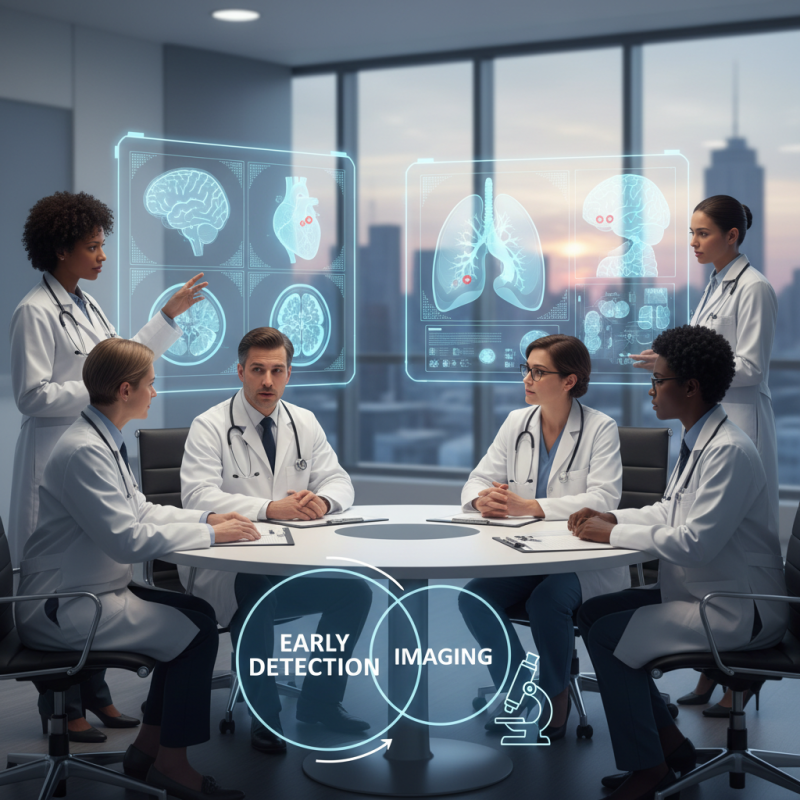
The Importance of Early Detection in Disease Management
Early detection plays a crucial role in the management of diseases. It allows for timely interventions, potentially halting the progression of illnesses. Many serious conditions, like cancer or heart disease, can be more effectively treated when identified early. Patients often experience better outcomes. This emphasizes the importance of regular screenings and awareness of symptoms.
Tips for maintaining awareness:
- Schedule routine check-ups.
- Educate yourself on common symptoms.
- Keep track of your family medical history.
Imaging technology improves early detection significantly. Techniques such as MRI, CT scans, and ultrasounds provide detailed insights. They can reveal conditions before physical symptoms appear. However, over-reliance on imaging may lead to unnecessary anxiety or further tests. It’s essential to balance vigilance with an understanding of personal risk factors.
Consider seeking second opinions if you're uncertain. Communicate openly with healthcare providers. Learning to advocate for yourself is key. Stay proactive, but also recognize that not every sign requires immediate panic. Understanding this balance is important in disease management.
Overview of Imaging Modalities in Healthcare
Imaging plays a crucial role in early detection of diseases, which can significantly impact patient outcomes. Healthcare professionals rely on various imaging modalities to diagnose conditions accurately. According to a report by the American College of Radiology (ACR), advanced imaging techniques can identify diseases at earlier stages, enhancing treatment effectiveness.
X-ray, MRI, and CT scans are among the primary imaging tools. X-rays are often the first step in diagnosing fractures and infections. A study published in the Journal of the American Medical Association found that 25% of early lung cancers were missed without the use of low-dose CT screening. MRI offers exceptional soft tissue contrast, aiding in the detection of tumors that may not be visible on X-rays.
However, the implementation of these technologies comes with challenges. The cost of imaging can limit accessibility for some patients. Additionally, over-reliance on imaging might lead to false positives, causing unnecessary anxiety and further testing. Thus, while imaging is vital, it is essential to use it judiciously and understand its limitations.
How Imaging Techniques Enhance Diagnostic Accuracy
Imaging techniques play a vital role in enhancing diagnostic accuracy. They provide detailed insights that are crucial for early detection of diseases. According to a study published by the Journal of Medical Imaging, early imaging can identify diseases at least 30% earlier than clinical evaluation alone. This is particularly important in cases like cancer, where early diagnosis significantly improves survival rates.
Advancements in imaging, such as MRI and CT scans, offer clearer pictures of internal structures. The American College of Radiology reports that imaging contributes to reducing misdiagnosis rates by up to 20%. However, the reliance on imaging is not without its challenges. In some cases, false positives can lead to unnecessary anxiety and procedures. This highlights the need for careful interpretation by trained professionals.
Diagnostic accuracy is essential, but it isn't failproof. A study in Radiology found that 10% of imaging interpretations could be reconsidered, emphasizing the complexity of human anatomy. A collaborative approach involving radiologists and referring physicians can help mitigate these issues. The journey of improving diagnostic accuracy is ongoing, requiring continuous learning in the imaging field.
The Impact of Advanced Imaging on Treatment Outcomes
Advanced imaging techniques have dramatically transformed the landscape of medical treatment. High-resolution scans and functional imaging provide critical insights into the body's internal structure. These tools allow for earlier and more accurate diagnoses, which can lead to improved care pathways. For instance, detecting tumors at early stages can significantly influence treatment options. Patients often experience better outcomes due to timely interventions.
The efficacy of advanced imaging is clear. Studies show that precise imaging can enhance surgical planning and reduce operative time. However, there are concerns about overdiagnosis. Sometimes, findings may not translate into life-threatening conditions. This complexity complicates the decision-making process for healthcare providers. They must navigate the balance between the benefits of early detection and the risks of unnecessary procedures.
Despite advancements, challenges remain. Not all patients have equal access to advanced imaging. Research indicates disparities based on socioeconomic factors. This raises questions about equity in healthcare. Continuous effort is required to ensure that all patients benefit from the latest imaging technologies. Improved imaging techniques must also evolve with ethical considerations in mind. Understanding these nuances is essential for healthcare professionals to provide the best possible care.
Challenges and Future Directions in Imaging for Early Detection
Imaging plays a crucial role in early detection of diseases. However, challenges remain. Current techniques often face limitations in sensitivity and specificity. Many imaging modalities can miss subtle changes in early-stage conditions. For example, small tumors may not be visible in standard scans. These gaps can lead to late diagnoses and poorer outcomes.
Moreover, technological advancements are not uniform across regions. Some areas lack access to the latest imaging technologies. Disparities in healthcare access contribute to inconsistent early detection rates. This inconsistency poses ethical challenges. As a result, certain populations remain underserved. Addressing these disparities requires a holistic approach.
Future directions in imaging need to focus on integration and innovation. Increased collaboration among professionals can improve outcomes. Enhanced training programs can equip radiologists with necessary skills. Artificial intelligence may also play a role in advancing imaging accuracy. However, reliance on AI presents its challenges, including data bias and interpretative variability. Continuous evaluation and adaptation will be essential in tackling these issues head-on.
Conclusion
In the field of healthcare, early detection plays a crucial role in managing diseases effectively. Imaging techniques significantly contribute to this aim by providing accurate and timely diagnostics. What is the role of imaging in early detection? It encompasses a variety of modalities that enhance the visualization of internal structures, allowing clinicians to identify abnormalities at the earliest possible stage.
Advanced imaging technologies not only improve diagnostic accuracy but also influence treatment outcomes by facilitating personalized medicine approaches. Despite the benefits, challenges persist, such as the need for standardized protocols and addressing the economic burden associated with imaging tests. The future of imaging in early detection will likely focus on integrating new technologies and methodologies to overcome these obstacles and improve patient care.
 Pipmed Medical

