Pipmed Medical Pipmed Medical

Why is Imaging Crucial for Accurate Diagnosis in Healthcare?

Time:2026-04-29 Author:Henry
0%

In healthcare, accurate diagnosis is paramount. Imaging plays a significant role in this process. This begs the question: why is imaging important in diagnosis? Diagnostic imaging includes techniques like X-rays, MRIs, and CT scans. Each method provides unique insights into the body’s inner workings.

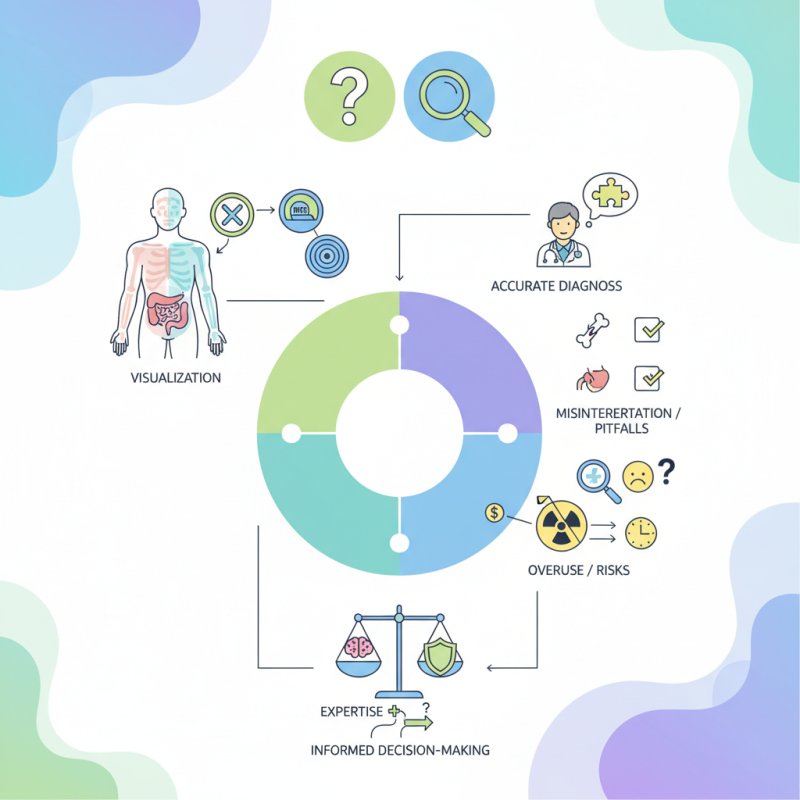
With imaging, doctors can visualize structures that may not be apparent through physical exams alone. This visualization can reveal fractures, tumors, and other critical conditions. However, it is important to acknowledge that reliance on imaging also has its pitfalls. Misinterpretation of images can lead to misdiagnoses. Additionally, overuse of imaging can expose patients to unnecessary radiation and costs.

Understanding the balance of imaging use is essential for effective healthcare. It requires expertise and a cautious approach. Effective diagnosis hinges on knowing when to use imaging and when to rely on other methods. Therefore, recognizing why imaging is important in diagnosis is crucial for both patients and healthcare providers.
Why is Imaging Crucial for Accurate Diagnosis in Healthcare?

The Role of Imaging in Modern Healthcare Diagnostics

Imaging plays a vital role in modern healthcare diagnostics. It provides clinicians with detailed views of the internal anatomy. This visual information is essential for identifying diseases, monitoring progress, and guiding treatments. Techniques like X-rays, MRIs, and CT scans can reveal conditions not visible through a physical exam alone.

However, dependence on imaging comes with risks. Misinterpretations can lead to incorrect diagnoses. Some patients may undergo unnecessary procedures due to a false positive. The challenge lies in ensuring that radiologists have the right training and experience. Continuous education in imaging technologies is crucial for accuracy.

The integration of advanced imaging techniques can shift the diagnostic landscape. Yet, it also demands rigorous validation. New methods must prove reliable before becoming standard practice. Balancing innovation with caution is essential in the pursuit of better healthcare outcomes.

Types of Imaging Techniques Used in Medical Diagnosis

Imaging plays a vital role in modern healthcare, particularly in diagnosis. It enables healthcare professionals to visualize internal structures and conditions effectively. Various imaging techniques help ensure accurate assessments and treatment plans. Common methods include X-rays, CT scans, MRIs, and ultrasounds.

X-rays remain one of the most widely used methods, providing quick insights into bone fractures or infections. According to a report by the American College of Radiology, over 200 million X-ray exams occur annually in the U.S. alone. This high volume underscores their importance, yet X-rays do have limitations. For instance, they may overlook soft tissue damage.

MRI scans, on the other hand, offer detailed images of soft tissues and organs. They do not use ionizing radiation, making them safer for frequent use. A study published in the Journal of Magnetic Resonance Imaging highlighted that over 40 million MRI examinations are performed yearly in the U.S. However, MRI costs and availability can be barriers. Meanwhile, ultrasonography is notable for its real-time imaging capabilities. It is particularly useful in obstetrics. Yet, operator skill significantly impacts its effectiveness, and misinterpretations can occur.

Why is Imaging Crucial for Accurate Diagnosis in Healthcare? - Types of Imaging Techniques Used in Medical Diagnosis

Imaging Technique Description Common Uses Advantages Limitations
X-Ray A form of electromagnetic radiation that can penetrate body tissues. Bone fractures, dental evaluations, chest examinations. Quick results, widely available, low cost. Limited soft tissue contrast, exposure to radiation.
MRI (Magnetic Resonance Imaging) Uses strong magnetic fields and radio waves to produce detailed images of organs and tissues. Brain imaging, spinal cord evaluations, joint issues. High-resolution images of soft tissues, no ionizing radiation. Longer scan times, higher costs, not suitable for patients with certain implants.
CT Scan (Computed Tomography) Combines X-ray images taken from different angles to create cross-sectional images. Tumor detection, internal injuries, lung disease analysis. Rapid imaging, better soft tissue contrast than traditional X-rays. Involves higher radiation exposure, potential allergic reactions to contrast material.
Ultrasound Uses high-frequency sound waves to create images of internal organs. Pregnancy monitoring, organ assessment, blood flow evaluation. Non-invasive, no radiation exposure, real-time imaging. Limited by body habitus, lower-quality images for deeper structures.

How Imaging Enhances Disease Detection and Treatment Planning

Imaging plays a vital role in healthcare by enhancing disease detection. Techniques like X-rays, MRIs, and CT scans allow doctors to see inside the body. This view helps identify conditions that might not be visible through physical exams or lab tests alone. For example, a tumor could be missed without imaging technology. Timely detection can significantly influence treatment outcomes.

Moreover, imaging supports treatment planning. It provides precise information about the location and size of a disease. Surgeons rely on these details to plan operations with accuracy. In some cases, imaging finds underlying issues that change the course of treatment. For instance, a patient may present with symptoms that seem one-dimensional. Imaging, however, uncovers additional problems needing immediate attention.

While imaging offers immense benefits, challenges exist. Not every imaging study provides clear answers, and interpreting results requires experience. Radiologists must carefully analyze images and consider other health factors. Misinterpretation or over-reliance on imaging could lead to false conclusions. Balancing technology with clinical judgment is essential for delivering accurate healthcare.

The Impact of Imaging on Patient Outcomes and Healthcare Efficiency

Imaging technology plays an essential role in healthcare. Studies show that accurate imaging can increase diagnostic accuracy by up to 30%. This advancement allows healthcare professionals to identify diseases earlier, facilitating quicker interventions. The use of MRI and CT scans has significantly improved our understanding of complex conditions like cancer and neurological disorders.

Patient outcomes are closely linked to imaging accuracy. A report from the Radiological Society of North America indicates that better imaging reduces the need for invasive procedures. In fact, patients who receive accurate imaging experience reduced hospital stays and fewer complications. This not only enhances patient satisfaction but also contributes to overall healthcare efficiency.

However, in some cases, imaging studies may lead to overdiagnosis. This can cause unnecessary anxiety and treatment. It is necessary for healthcare providers to weigh the benefits and risks of imaging. Balancing these factors is crucial. Continuous training for radiologists and clear communication with patients can mitigate these imperfections. Investing in cutting-edge imaging techniques is vital, but so is the responsibility of the medical community in ensuring appropriate use.

Challenges and Advances in Medical Imaging Technology

Medical imaging technology is evolving rapidly. Innovations like MRI and CT scans have transformed diagnosis. However, several challenges persist. High costs limit access in many regions. Training healthcare professionals is crucial for effective use. Misinterpretation can happen, leading to serious consequences. Staying updated with advancements is vital for accuracy.

The integration of AI in imaging shows promise. Machine learning can assist radiologists in detecting anomalies. Yet, reliance on technology requires caution. Algorithms are not infallible. Human oversight remains essential. Ethical concerns also arise with data usage. Balancing innovation and patient privacy is challenging.

Emerging imaging modalities, such as molecular imaging, provide deeper insights. These techniques allow for earlier detection of diseases. However, they come with high complexity and cost. Accessibility remains an issue for many healthcare systems. Continuous investment in research is necessary to ensure equitable access and reliable results. As the field advances, a commitment to melding technology with human expertise is essential for optimal patient outcomes.

Imaging Modalities Frequency in Medical Diagnosis

This bar chart illustrates the frequency of different imaging modalities used in medical diagnosis per 1000 patients. X-rays are the most commonly used, followed by Ultrasound, while PET scans are the least utilized among the listed modalities. Accurate imaging is crucial for effective diagnosis and treatment planning, highlighting the importance of these technologies in healthcare.

FAQS

: What is the role of imaging in healthcare diagnostics?

: Imaging helps clinicians view internal anatomy, identify diseases, and monitor treatment progress effectively.

What are common imaging techniques used?

Common techniques include X-rays, MRIs, CT scans, and ultrasounds. Each serves different diagnostic purposes.

How do X-rays contribute to diagnosis?

X-rays provide quick insights into bone fractures and infections but may miss soft tissue damage.

What are the advantages of MRI scans?

MRI scans give detailed images of soft tissues without using ionizing radiation, making them safer for repeated use.

How does imaging aid in treatment planning?

Imaging offers precise details about diseases' locations and sizes, essential for accurate surgical planning.

What are potential issues with imaging interpretation?

Misinterpretations can occur, leading to incorrect diagnoses. Experience is crucial for accurate analysis.

What challenges does imaging present in healthcare?

Not all imaging studies yield clear results, and over-reliance on imaging may result in false conclusions.

Why is continuous education important for radiologists?

Ongoing training ensures radiologists stay updated on imaging technologies, enhancing diagnostic accuracy.

How can imaging uncover hidden health issues?

Imaging can reveal underlying problems that change treatment approaches, highlighting its importance in thorough assessments.

What is the risk of innovation in imaging technologies?

New imaging methods require rigorous validation before use to balance innovation with patient safety in healthcare.

Conclusion

Imaging plays a pivotal role in modern healthcare diagnostics, making it essential for accurate diagnosis. Various imaging techniques, such as X-rays, MRI, and CT scans, are employed to visualize internal structures, enabling healthcare professionals to detect diseases at early stages. Understanding why imaging is important in diagnosis lies in its ability to provide clear and detailed images that lead to informed treatment planning and improved patient outcomes.

The impact of imaging extends beyond mere detection; it enhances healthcare efficiency by streamlining the diagnostic process and reducing the need for exploratory surgeries. However, advancements in medical imaging technology face challenges, including the need for training and the integration of AI in diagnostic processes. Overall, imaging not only aids in the identification of health issues but also plays a crucial role in optimizing treatment strategies and enhancing the quality of care.

Henry

Henry

Henry is a dedicated marketing professional with a profound expertise in the company's offerings. With years of experience in the industry, he possesses an impressive understanding of the market dynamics and consumer behaviors that drive success. Henry is committed to sharing his insights through......